
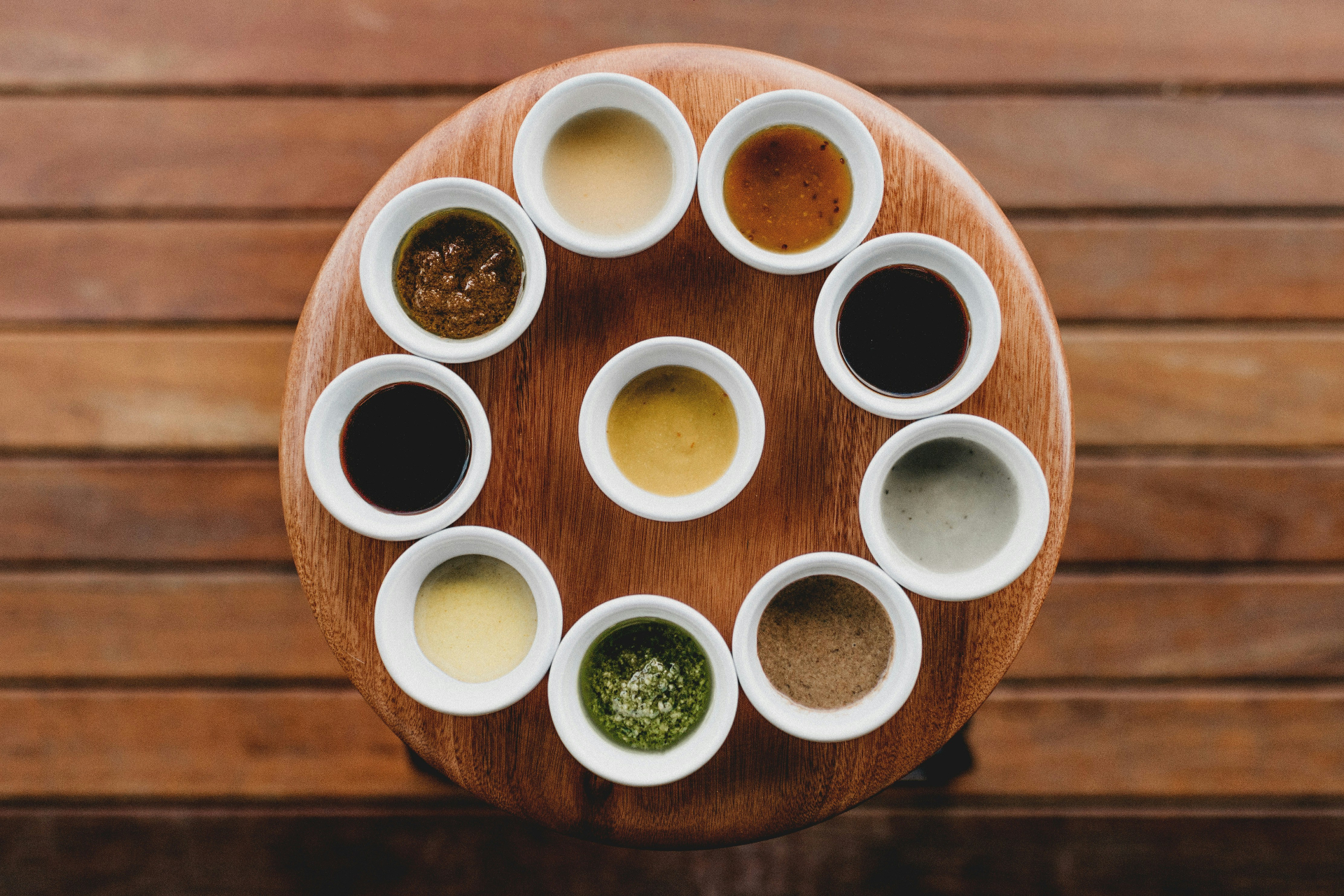
Sauces & Dressings Grade
Guar gum hydrates in seconds of contact with cold liquid, builds a shear-thinning viscosity that pours easily from the bottle yet clings once it hits the plate, and stabilizes oil-in-water emulsions against separation across the shelf life — without the salt or pH sensitivity that limits some other stabilizers.
Overview
Sauces & Dressings Grade (GG-SAU) is developed specifically for sauce, dressing, marinade, and condiment manufacturers. It's worth being precise about what guar gum actually does in an emulsified sauce: it isn't a true emulsifier — it doesn't reduce the interfacial tension between oil and water the way lecithin or a surfactant does. Instead, it's an emulsion stabilizer: by sharply increasing the viscosity of the continuous water phase, it slows the rate at which oil droplets can rise, collide, and coalesce (a relationship described by Stokes' Law — droplet movement speed is inversely related to the viscosity of the surrounding phase). That's also the mechanism behind guar's shear-thinning 'nappe' behavior: viscosity drops under the shear of pouring, then rebuilds at rest, so the same sauce pours from a bottle and still clings to a salad or a piece of meat. Because guar gum is non-ionic, this performance holds up reliably across the acidic, salty conditions typical of vinaigrettes and marinades — conditions that can compromise charged hydrocolloids. Typical dosage ranges from 0.1–0.5%, adjustable to your target pourability, cling, and process conditions.
Key Benefits
Rapid Hydration
Reaches full viscosity within seconds of contact with cold liquid, which matters on high-speed sauce and dressing lines where dwell time is short.
Emulsion Stability
Keeps oil and water phases from separating over the product's shelf life, even through temperature fluctuation in transport.
Particle Suspension
Keeps solid particulates like herbs, spices, or pulp evenly distributed instead of settling to the bottom of the container.
Shear-Dependent Cling & Pourability
Guar gum's viscosity drops under the shear of pouring or squeezing, then rebuilds once the sauce is at rest — giving easy dispensing from the bottle but a thicker, clinging coat once it's on the food. This is the mechanism behind 'nappe,' the industry term for a sauce's ability to coat and hold rather than run off.
Acid & Salt Tolerance
As a non-ionic gum, guar gum's viscosity performance holds up across the acid and salt levels common in vinaigrettes, marinades, and soy- or fish-sauce-based formulations — unlike ionic hydrocolloids (e.g. alginate), which can lose function or gel unpredictably in high-salt, low-pH systems.
Freeze-Thaw Stability for Frozen Sauces & Marinades
Reduces oil-water re-separation and liquid weeping when frozen sauces, marinades, and dressings are thawed — protecting the emulsion and texture through cold-chain distribution rather than just at the point of manufacture.
Reduced-Oil Formulation Support
Helps maintain body and cling in light or reduced-oil dressings, offsetting the thinner mouthfeel that typically comes with cutting oil content.
Retort & Hot-Fill Stability
Retains functional viscosity through thermal processing — hot-fill or retort — supporting shelf-stable, ambient sauces that don't rely on refrigeration for microbial safety.
Technical Specifications
| Product Code | GG-SAU |
| Category | Food & Beverage |
| Recommended Dosage | 0.1–0.5% |
| Primary Application | Ketchup & tomato-based sauces, BBQ sauce, Hot sauce, Chutneys, Relishes, Salsa, Salad dressings, Vinaigrettes, Mayonnaise-style dressings, Dips & spreads, Pasta sauces, Marinades |
Formulation Guidance
For oil-in-water systems (dressings, mayonnaise-style sauces), hydrate guar gum fully in the aqueous phase before introducing the oil phase. Viscosity built in the water phase ahead of homogenization is what actually stabilizes the emulsion — adding guar after the oil is already incorporated gives the oil droplets time to coalesce before the stabilizing viscosity is in place.
The pour-vs-cling balance in a sauce or dressing doesn't require a second ingredient to tune — it's controlled by two levers within the guar gum itself. First, dosage: guar's viscosity builds non-linearly with concentration, so small dosage changes within the 0.1–0.5% range can shift a formulation noticeably between easy-pour and heavy-cling without needing a large adjustment. Second, viscosity grade: a higher-viscosity guar gum will deliver stronger cling and body at a lower dosage — better suited to thick condiments like ketchup or BBQ sauce — while a lower-viscosity grade gives a lighter, more pourable result at the same or higher dosage, better suited to vinaigrettes and thin marinades. Choosing the right grade from the range, rather than raising dosage past your target texture, is usually the more cost-efficient way to hit a specific pour/cling profile.
On timing with salt and acid: guar gum will still fully hydrate in high-salt or low-pH formulations, but hydration proceeds somewhat more slowly under those conditions. Where practical, hydrate the guar gum in plain water or a lower-salt/lower-acid portion of the formulation first, then introduce vinegar, salt, or acidic components afterward, rather than dissolving guar directly into the final acidified brine.
Related Grades
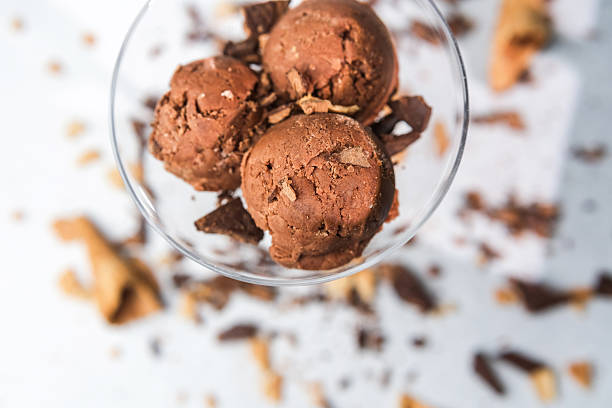
Ice Cream Grade
Stops ice crystal growth and locks in smoothness through heat-shock cycles. Crystal size reduced 40–60%. Supports 80–120% overrun.
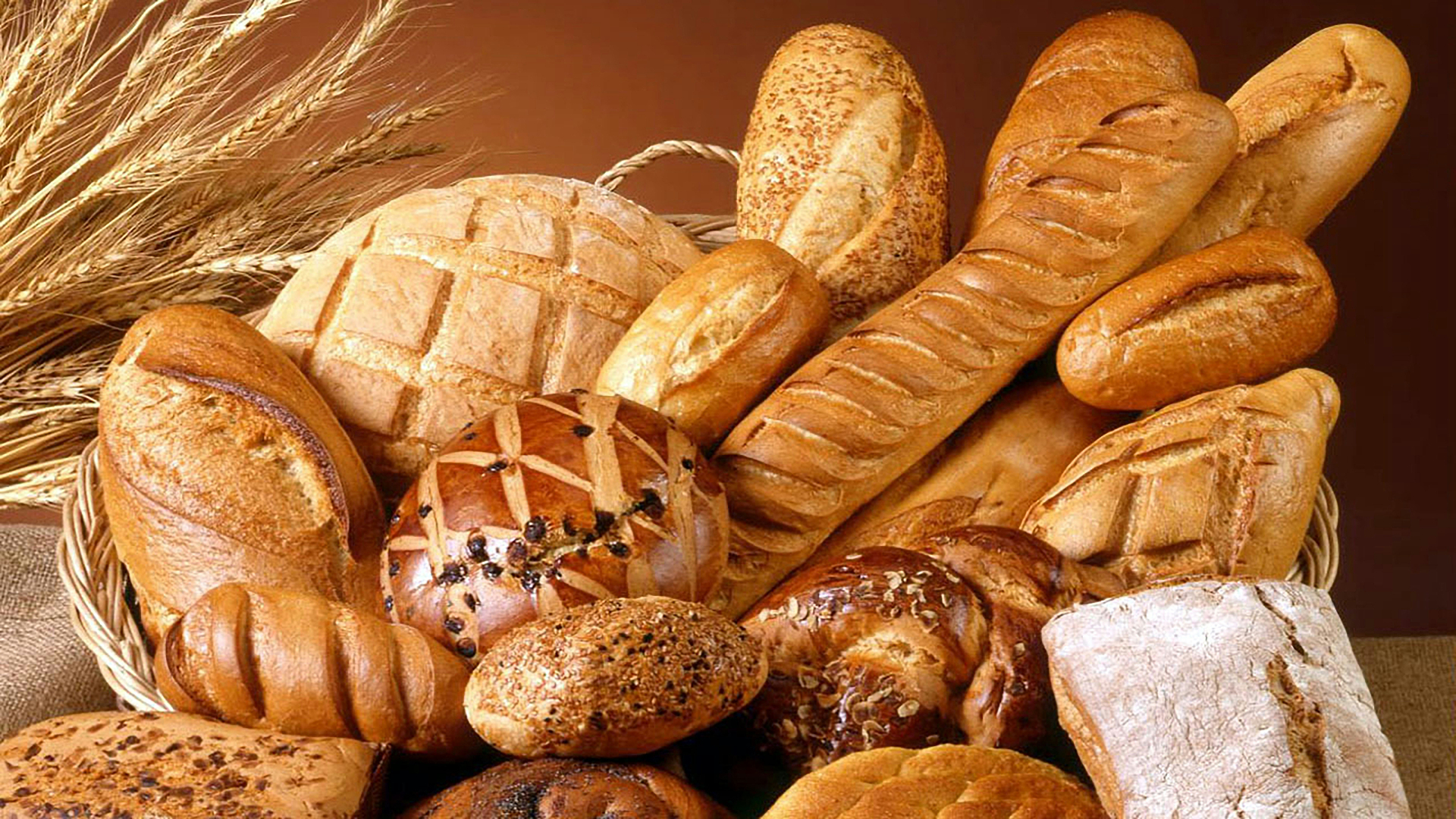
Bakery Grade
Improves dough viscosity, moisture retention, shelf life in bread, biscuits, cakes, GF goods. Uniform crumb structure.
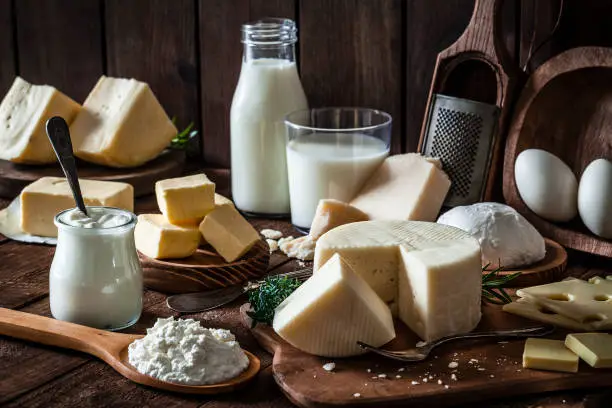
Dairy Grade
Prevents syneresis, smooth creamy texture in yogurt, cheese, dairy desserts, flavoured milks. Excellent whey binding.
Ready to Trial Sauces & Dressings Grade?
Our technical team can help with dosage guidance and formulation support.